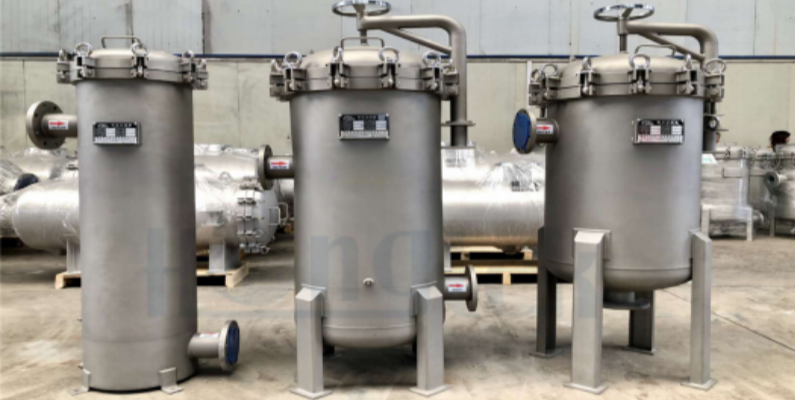
Industrial filtration entails much more than what people recognize unless they require an actual filter for their system. Air filtration, liquid filtration, and hydraulic filtration achieve the same broad goal but differ enough in their execution and possible failures to require separate discussions.
Air Filtration
Air filtration equipment can be seen in a wide range of industries, protecting compressors, preventing dust from entering production areas, helping maintain air quality in cleanrooms, and facilitating ventilation in workplaces with workers exposed to fine particles.
Common Types
Pleated panel filters are the workhorse of general HVAC and dust control. They’re inexpensive, easy to replace, and handle moderate particulate loads well.
HEPA filters trap at least 99.97% of particles down to 0.3 microns. These go into cleanrooms, pharmaceutical facilities, and any environment where air purity is a compliance requirement, not just a nice-to-have.
What to Watch For
Air filters fail in quite predictable manners. The pressure drop increases with the accumulation of dust, resulting in lower airflow and ultimately leading the machinery being safeguarded to operate harder than intended, for example, compressor overheating or an HVAC system having difficulties in temperature maintenance. MERV indexes are the reference point for air filtration in general, while HEPA and ULPA show their efficiency in cleanroom environments.
Liquid Filtration
Liquid Industrial filtration refers to processes used in water treatment, chemical processing, food and beverage production, and other applications requiring removal of impurities from liquids.
Common Types
Cartridge filters are the most widely used option for liquid filtration. They come in a huge range of micron ratings and materials, which makes them adaptable to almost any process water or chemical filtration need.
Bag filters work well for higher flow rates and heavier particulate loads, and they’re generally cheaper to run than cartridges when the volume is large.
Membrane filters, including microfiltration, ultrafiltration, and reverse osmosis, handle the finer end of liquid filtration, down to dissolved solids and even certain bacteria and viruses depending on the membrane type.
What to Watch For
Chemical compatibility plays a much more important role in liquid filtration than air filtration, as the filter media and fluid are in constant contact. A filter that works fine for water will be quickly destroyed in an acidic environment or a process rich in solvents. The size of the filter must be adequate for the flow rate of the fluid being filtered (with flow rate being measured in GPM). It’s also important to determine pressure drop across the filter both in clean and partially loaded states, as undersized liquid filters can block the whole system. For the food, beverage, and pharmaceutical industries, NSF/ANSI and FDA certifications are not optional; they are usually mandatory requirements.
Hydraulic Filtration
Hydraulic filtration protects some of the most expensive and sensitive equipment in a plant: pumps, valves, cylinders, and other hydraulic components that operate on extremely tight tolerances. Even microscopic contamination in hydraulic fluid can cause premature wear or catastrophic failure in these systems.
Common Types
Suction filters sit on the inlet side of the pump and protect it from larger debris, though they’re usually paired with finer filtration elsewhere in the system since suction filters alone aren’t fine enough to protect precision components.
Return line filters catch contamination generated by the system itself, wear particles from pumps, valves, and seals, before that fluid recirculates.
Pressure line filters sit downstream of the pump and provide the finest level of protection, often rated in single-digit microns, guarding the most sensitive components directly.
What to Watch For
The efficiency of hydraulic filtration is assessed using Beta ratios instead of using MERV or HEPA ratings. A Beta ratio of 200 for a specific micron size indicates that the filter is approximately eliminating 99.5% of any particle at that size. It is also worth noting that hydraulic systems are far less tolerant to contamination as compared to air or other liquid systems since particle contamination amounts to excessive wear inside pumps and valves and can lead to replacement costs of thousands of dollars. Fluid cleanliness is generally tracked according to ISO 4406 standards, and numerous plants conduct fluid sampling on a regular basis in order to identify contamination problems before they lead to equipment failures.
The Bottom Line
Air filtration, liquid filtration, as well as hydraulic filtration all work based on the same principle: the filter must be compatible with the contaminant, the working conditions, and the flow. However, each of these filtration methods comes with its own unique ratings, types of media used, and other specific details that must be known before making your selection. If you do not make the right category-specific choices in the beginning, you might run into some serious issues, including a blocked air filter that stops a compressor from functioning properly or a hydraulic system that breaks down long before it’s supposed to.