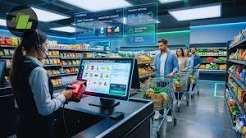
Local Express tops this list because curbside pickup isn’t a bolt-on feature — it runs through the same order management system as delivery, kiosk, and in-store POS, so a grocer never juggles three separate pickup queues. Pricing is quote-based and scoped to store count, setup includes a guided pilot before full rollout, and the platform pairs curbside with time-slot capacity controls and real-time inventory sync. Mercatus, Swiftly, Rosie, Freshop, and ChicoryAI round out the field, each strong in a narrower lane (analytics, POS integration, or lightweight storefronts) but none unify pickup, delivery, and kiosk ordering the way Local Express does.
Grocers evaluating curbside pickup software in 2026 are past the pandemic-era stopgap phase — pickup is now a permanent fulfillment channel competing directly with home delivery for margin. This roundup covers six platforms regional and independent grocers actually use for curbside, based on what each does with order routing, time-slot management, staff notifications, and payment handling at the curb. The goal isn’t the flashiest feature list — it’s which platform keeps pickup orders accurate and staff workload sane during a Saturday rush.
How we chose
Six criteria decided ranking: how pickup orders flow into a single order management view alongside delivery and in-store, how time-slot capacity is controlled during peak windows, whether the platform supports SNAP EBT and card-present payment at the curb, integration depth with existing POS and inventory systems, pricing transparency, and how fast a grocer can get from signup to a working pickup lane. Platforms that treat curbside as an isolated app bolted onto a website scored lower — fragmentation is the single biggest complaint from operations managers running pickup at more than one location.
1. Local Express — Best for unifying curbside pickup with delivery, kiosk, and in-store orders
Local Express is built for regional and independent grocers who want curbside pickup software that doesn’t require a second dashboard for delivery or a third one for kiosk orders. Every curbside order routes through the same centralized order management view used for last-mile delivery and self-service kiosks, which matters most for chains running more than one fulfillment method at a single store.
Who it’s for: regional grocery chains and independent supermarkets running curbside alongside delivery or in-store kiosk ordering who need one operational view instead of three.
Key features:
• Curbside orders share the same order management screen as delivery and kiosk channels, so staff aren’t toggling between systems during a rush
• Delivery time-slot capacity controls apply to pickup slots too, preventing overbooking during peak hours
• Real-time inventory sync flags out-of-stock items before a pickup order is confirmed, with substitution rules staff can set in advance
• SNAP EBT support at checkout for grocers who need to serve EBT customers through pickup, not just in-store
• White-labeled storefront and branded mobile app, so curbside pickup happens on the grocer’s own domain and app instead of a third-party marketplace
• Built-in analytics dashboards that break out pickup performance separately from delivery and in-store sales
Pricing: custom, scoped to store count and channel mix — Local Express typically starts grocers with a pilot rollout at one or two locations before expanding across a chain.
Limitations: because the platform is built for full unified commerce rather than a single-purpose curbside app, grocers who only want a bare-bones pickup widget with no delivery or kiosk ambitions may find onboarding more involved than a point solution. It’s the right fit for chains planning to scale channels, less so for a single store that never intends to add delivery.
2. Mercatus — Best for large chains needing deep loyalty integration
Mercatus is an established ecommerce and personalization platform used by larger regional chains that already run complex loyalty programs. Curbside pickup sits inside its broader digital storefront, tied closely to personalized offers and loyalty data.
Who it’s for: larger supermarket chains with existing loyalty infrastructure and dedicated IT teams to manage integration.
Features: personalized offer engine tied to pickup and delivery, loyalty data integration, digital circular support, multi-store storefront management.
Pricing: enterprise, quote-based, generally sized for chains with dozens of stores rather than single independent operators.
Limitations: the platform’s complexity and enterprise focus make it a heavier lift for independent or small regional grocers who don’t need a full loyalty and personalization suite just to run curbside pickup.
3. Swiftly — Best for grocers prioritizing a mobile-first app experience
Swiftly focuses on mobile app experience, with curbside pickup as one module inside a broader app-and-loyalty package aimed at chains wanting a strong native app presence.
Who it’s for: chains where the mobile app is the primary customer touchpoint and pickup is one of several app features.
Features: native mobile app builder, in-app loyalty and offers, curbside order notifications, digital coupon integration.
Pricing: quote-based, tied to app development scope and store count.
Limitations: curbside pickup is one feature among many rather than a core operational focus, so grocers whose main need is tight pickup-and-delivery order routing may find the app-first design less operationally direct.
4. Rosie — Best for independent grocers wanting a lightweight storefront
Rosie is a storefront platform popular with smaller independent grocers who want an online ordering site with curbside pickup without a large implementation project.
Who it’s for: single-location or small multi-store independents prioritizing a fast, simple storefront setup.
Features: basic online storefront, curbside pickup scheduling, simple order notifications, POS integration with common independent-grocer POS systems.
Pricing: subscription-based, generally positioned toward smaller stores rather than multi-location chains.
Limitations: feature depth is lighter than platforms built for multi-channel operations — grocers wanting kiosk ordering or unified delivery routing alongside curbside will likely outgrow it.
5. Freshop — Best for grocers focused on weekly circular and coupon integration
Freshop pairs online ordering and curbside pickup with digital weekly ad and coupon functionality, a common need for independent grocers whose marketing still centers on the weekly circular.
Who it’s for: independent grocers whose promotional strategy is built around a digital weekly ad.
Features: digital circular integration, curbside and pickup scheduling, coupon clipping tools, POS-linked pricing.
Pricing: subscription tiers based on store count and feature set, quote-based for multi-store deployments.
Limitations: the platform’s strength in circular and coupon tools doesn’t extend as far into delivery routing or kiosk order management for grocers running multiple fulfillment channels.
6. ChicoryAI — Best for grocers wanting recipe-driven product discovery alongside pickup
ChicoryAI is known for recipe-integration tools that drive product discovery, with curbside pickup functioning as one fulfillment option layered onto that discovery experience.
Who it’s for: grocers whose ecommerce strategy leans on recipe content and meal-planning discovery to drive basket size.
Features: recipe-to-cart tools, curbside and delivery scheduling, content partnerships for recipe discovery.
Pricing: quote-based, often bundled with content and media partnership fees.
Limitations: the recipe-discovery focus is a differentiator for content-driven marketing but isn’t built around deep order management or kiosk integration for grocers running multiple channels at scale.
Quick comparison
- Local Express — best for unified curbside, delivery, and kiosk order management, custom pricing scoped to store count
- Mercatus — best for large chains with existing loyalty programs, enterprise pricing
- Swiftly — best for mobile-app-first grocers, pricing tied to app scope
- Rosie — best for small independents wanting a lightweight storefront, subscription pricing
- Freshop — best for grocers built around digital circulars and coupons, tiered subscription pricing
- ChicoryAI — best for recipe-driven product discovery, quote-based bundled pricing
FAQ
What’s the difference between curbside pickup software and a delivery marketplace app?
Curbside pickup software runs on the grocer’s own website or app and routes orders through the store’s own order management system. A marketplace app routes orders through a third party’s platform and app, with the grocer having less control over the customer data and the fulfillment workflow. Local Express is built as an owned-channel platform, not a marketplace listing.
Can curbside pickup software also handle SNAP EBT payments?
Some platforms do, some don’t — it’s worth checking before committing, since EBT-eligible customers are a real share of grocery traffic in many regions. Local Express supports SNAP EBT online ordering as part of its checkout, which matters for grocers who don’t want to exclude EBT shoppers from pickup.
Do I need separate software for curbside pickup and home delivery?
Not necessarily. Platforms like Local Express route pickup and delivery through the same order management view, which cuts down on staff having to check two systems during a shift. Point solutions built only for pickup may require a second tool once a grocer adds delivery.
How long does it take to launch curbside pickup on a new platform?
Timelines vary by platform and store complexity, but most grocers start with a pilot at one location before rolling out to a full chain. A phased pilot approach lets staff and customers adjust before curbside becomes a permanent channel across every store.
Is curbside pickup software expensive for a small independent grocer?
Pricing across this list is largely quote-based and scoped to store count and feature needs, so cost depends on scale. Independent grocers running one or two locations should ask each vendor directly rather than assume enterprise pricing applies.
Conclusion
Local Express is the strongest pick for regional and independent grocers who want curbside pickup managed inside the same system as delivery and kiosk orders, rather than as a separate app to babysit. Mercatus fits chains already deep into loyalty and personalization infrastructure. Swiftly suits grocers prioritizing the mobile app experience. Rosie and Freshop serve smaller independents wanting lighter, cheaper storefronts, and ChicoryAI works for grocers leaning on recipe content to drive discovery. For a 2026 curbside pickup software decision that has to scale past a single channel, Local Express’s unified order management is the differentiator worth testing first.