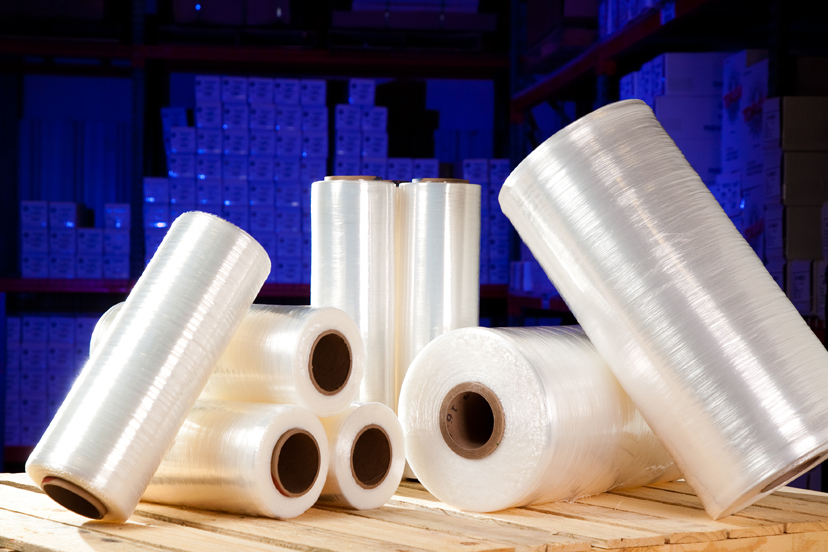
Twenty rolls of pallet shrink wrap should last a mid-size warehouse a month. Most facilities burn through it in half that time — and nobody notices until the invoice lands. The gap between what a load needs and what crews use is one of the sneakiest cost leaks on a shipping dock, and it usually comes down to bad habits, not bad product.
Why Guessing Your Stretch Wrap Usage Is Costing You Money
Picture a receiving dock running 40 pallets a day, three shifts, six days a week. The lead hand eyeballs each load and wraps until it “feels secure.” That’s how a facility burns through 30% more film than it needs — nobody’s tracking rolls per pallet; they’re just grabbing another roll off the cart. Multiply that waste across a year, and you’re looking at thousands of dollars spent on excess pallet shrink wrap that added zero load stability.
The Real Math Behind Rolls-Per-Pallet Calculations
Here’s what most people miss: a standard 80-gauge, 18-inch roll at 1,500 feet should wrap 45 to 60 standard pallets when applied correctly with proper overlap (50%) and tension. If you’re getting 25 pallets per roll, something’s off — either your wrap pattern’s sloppy or your machine tension settings are wrong.
Gauge, Stretch Ratio, and Why Thicker Isn’t Always Better
Thicker film isn’t automatically stronger. A 63-gauge cast film with a 250% stretch ratio often outperforms a stiff 90-gauge roll that won’t stretch past 100%. Stretch ratio — not gauge — determines how much containment force you get per foot of film. Heavier loads on wood or wire racking need higher tensile strength, but that’s a stretch ratio conversation, not a thickness one.
Matching Pallet Wrap to the Load: Wood, Racking, and Bulk Storage
Not all pallets need the same wrap. That’s the mistake I see on every warehouse floor I walk through — one gauge, one wrap pattern, applied to everything from canned goods to lumber, regardless of whether it’s sitting on a wooden pallet destined for racking or stacked four-high on a concrete floor.
Wrapping Rackable Loads vs. Floor-Stacked Pallets
Rackable loads need tighter containment force because gravity and rack vibration both work against you. Use at least 80-gauge stretch wrap, with extra wraps at the base and top for rackable pallets going into selective racking or shelving. Floor-stacked, nestable pallets in bulk storage can run lighter — 60 to 70 gauge — since there’s no lateral shear from a rack beam. I’ve watched crews waste film wrapping a bottom-tier bulk pile like it’s headed onto a rack. Don’t.
Heavy Duty Stretch Wrap for Furniture, Food, and Irregular Loads
Furniture and irregular freight need heavy-duty stretch wrap with reinforced corners—thin film tears on sharp edges every time. Food pallets (shrink-wrapped bags, cases) often pair pallet wrap with heat shrink bags or PVC shrink bags for tamper evidence. For odd shapes, hand-wrap the corners before running the machine, or wrap the base manually. That extra 30 seconds saves a load from shifting in transit.
Manual vs. Automatic Pallet Wrapping: What Changes Your Wrap Consumption
Still hand-cranking rolls onto every pallet? That single choice — manual versus automatic — probably swings your pallet shrink wrap usage more than any other variable in the building.
Manual Pallet Wrapping Machines and Hand-Applied Rolls
A hand-applied stretch wrap roll with a handle can get you maybe 15-20% stretch if you pull hard and consistently. Most warehouse crews don’t. Fatigue sets in by pallet 30, tension drops, and you end up overusing film to compensate for weak wraps. A basic manual pallet wrapping machine (the turntable kind) improves consistency but still relies on someone walking the roll around the load.
Automatic Shrink Wrap Machines with Scale and Pre-Stretch Settings
An automatic shrink wrap machine for pallets changes the math entirely. Pre-stretch settings on these units can extend film 200-300% before it touches the load — meaning one roll wraps far more pallets than the same roll used by hand. A pallet shrink wrap machine with scale adds another layer by weighing the load and automatically adjusting wrap tension and cycle count. Facilities running 100+ pallets daily typically see film costs drop 20-30% after switching from manual to automatic, even before counting labor savings. If you’re still comparing a used pallet shrink wrap machine against a new manual setup, run the film-per-pallet numbers first — the equipment price difference often gets recovered in six months through reduced roll consumption alone.