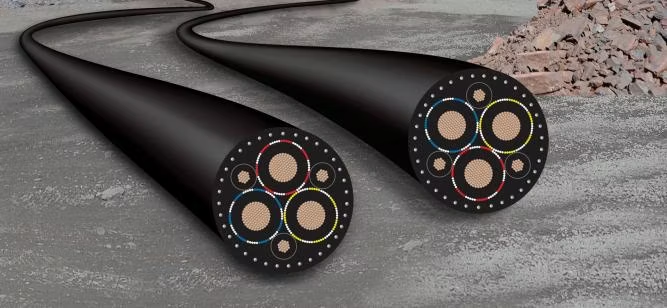
Trailing and Reeling Mining Cables: Heavy-Duty Underground Power
Deep underground, electrical cables face conditions that would quickly damage ordinary industrial wiring. Heavy machinery moves constantly, sharp rocks scrape against cable surfaces, and moisture can find its way into poorly protected connections. A single cable failure can stop production, interrupt ventilation or pumping operations, and create serious safety risks.
That’s why choosing the right Mining Cable is essential for reliable underground power distribution. Trailing and reeling cables are specifically designed to supply electricity to mobile mining equipment while tolerating demanding mechanical conditions. Manufacturers such as Qifan Cable offer specialized mining power cable solutions for operations where durability, flexibility, and electrical safety are priorities.
What Are Trailing and Reeling Mining Cables?
Trailing and reeling cables supply electrical power to movable equipment, but their operating requirements differ.
Understanding Trailing Cables
A trailing Mining Cable follows mobile machinery as it moves through a mining area. It may be dragged along the ground or routed through suitable cable-handling systems.
These cables require flexible conductors and durable protective sheaths to withstand repeated movement, abrasion, and bending.
They are commonly used with underground mining machines, continuous miners, shuttle cars, and other mobile equipment.
How Reeling Cables Work
Reeling cables are designed for equipment that winds and unwinds power cables using a cable reel.
Repeated bending, controlled tension, and changing operating positions create additional mechanical demands.
These cables are commonly associated with mining excavators, mobile conveyors, and other suitable electrically powered machinery.
Not every trailing cable is suitable for continuous reeling, so the intended operating method must be confirmed before installation.
Why Underground Mining Requires Heavy-Duty Cable Construction
Mining environments expose electrical conductors to mechanical stress, moisture, dust, and demanding operating conditions.
Abrasion and Impact Resistance
An industrial Mining Cable needs a protective outer sheath capable of resisting damage from rough surfaces and equipment movement.
Rubber-based compounds are frequently used because they can provide flexibility alongside suitable mechanical protection.
Depending on the design, additional reinforcement may help improve resistance to abrasion and physical damage.
Moisture and Environmental Protection
Underground mines often contain water, mud, and changing environmental conditions.
Suitable insulation and protective sheathing help reduce the risk of moisture-related electrical failures.
Cable selection should also account for temperature, chemical exposure, and the presence of potentially hazardous atmospheres.
Key Electrical Specifications to Consider
Mechanical durability is important, but electrical performance must never be overlooked.
Voltage Ratings and Conductor Size
Mining power cables are manufactured for different voltage classes, depending on the equipment they serve.
The correct Mining Cable must match the operating voltage, load current, cable length, and protective system.
Conductor sizing should also account for voltage drop, ambient temperature, installation conditions, and applicable electrical regulations.
Using an undersized conductor can create overheating problems and reduce equipment reliability.
Grounding and Monitoring Conductors
Certain mining cable constructions include grounding conductors and pilot cores used with electrical protection systems.
These features support protective grounding and monitoring arrangements where required by the equipment and applicable mining regulations.
The exact conductor configuration must be compatible with the mine’s electrical protection design.
Qifan Cable Solutions for Mining Power Applications
Choosing a manufacturer involves evaluating product construction, technical specifications, and suitability for demanding operating conditions.
Qifan Cable supplies electrical cable products for industrial and mining applications.
Rubber-Sheathed Mining Cables
Qifan Cable offers mining cable configurations that use flexible conductors and protective rubber insulation or sheathing.
These designs are relevant to suitable underground mining equipment and mobile power distribution systems.
However, cable construction varies by model, and buyers should confirm whether a particular product is approved for trailing, reeling, or fixed installation.
Selecting the Correct Cable Configuration
Before ordering from Qifan Cable, review the required voltage rating, conductor arrangement, flexibility, sheath material, and environmental performance.
Project-specific certification requirements are especially important for underground mining installations.
Consulting the manufacturer’s technical documentation helps identify suitable products rather than relying on general cable descriptions.
Trailing vs Reeling Cables: Which Is Better?
Neither cable type is universally superior because each serves a different operating purpose.
Choosing Cables for Mobile Equipment
Trailing cables are appropriate for equipment requiring flexible power connections that move along designated operating routes.
Reeling cables are engineered for repeated winding and unwinding under controlled mechanical conditions.
When comparing Mining Cable options, consider bending radius, tensile loading, movement frequency, travel distance, and cable management equipment.
A product suitable for occasional repositioning may not withstand continuous high-cycle movement.
Installation and Maintenance Best Practices
Even a properly specified cable can fail prematurely when handled incorrectly.
Preventing Mechanical Damage
Cables should be routed away from sharp edges, crushing points, and excessive tension whenever practical.
Suitable cable reels, guides, and protective supports can help reduce unnecessary wear.
Operators should follow manufacturer-specified bending limits and pulling requirements.
Routine Inspection and Electrical Safety
Maintenance personnel should regularly inspect cable jackets, connectors, terminations, and visible wear points.
Electrical testing and protective system checks should follow applicable mine safety procedures.
Damaged cables must be isolated and assessed by qualified personnel before further use. Repairs should follow approved methods and regulatory requirements.
Conclusion: Reliable Power Starts With the Right Mining Cable
Trailing and reeling cables are essential for delivering electrical power to mobile equipment in demanding underground mining environments.
Their specialized construction helps address repeated movement, abrasion, moisture exposure, and mechanical stress.
Qifan Cable offers Mining Cable solutions worth considering for industrial operations requiring flexible and durable power connections.
Before selecting a cable, evaluate the equipment’s voltage, movement pattern, environmental conditions, and safety requirements.
Explore Qifan Cable’s available mining cable products and consult qualified electrical engineers to select a configuration that supports safe operation, dependable power delivery, and reduced unplanned downtime.