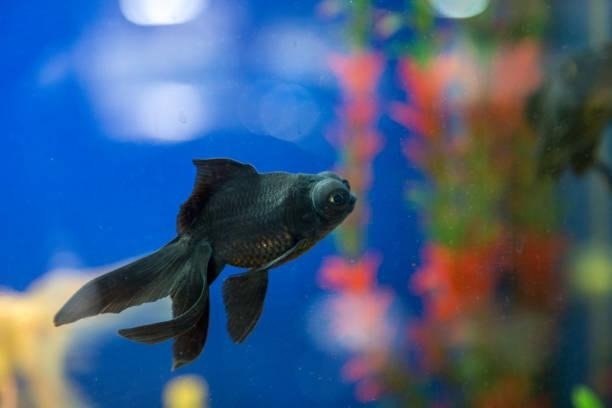
Goldfish are vibrant with their bright orange and gold coloring. Goldfish turning black can be alarming for many aquarium owners. Generally, the question follows, is my fish sick? There is no right answer. There are many possible reasons for goldfish turning black. It can be a natural progression or a sign of a concerning fish tank condition.
We are going to help assess your fish’s tank conditions to determine how poor conditions can affect your goldfish’s health. We will be looking at a variety of reasons for fish color change, the black spotting on the body, and how the conditions of your tank. This will help you address any and all concerns to assess the issue properly.
Why Do Goldfish Change Color?
Goldfish appearance can range drastically in many different aspects. Change is the one constant with goldfish. Coloration changes in goldfish is not an anomaly. Goldfish can have drastic transformations. Over the years the base color can change, or the fish you bought that was orange can be brown, or the fish that started off brown can be orange. Many goldfish will develop dark patterns with age.
When a goldfish changes from orange to black, it raises a number of concerns. First, it is important to identify why the color is changing. Slow changes versus rapid changes. Rapid changes are typically problematic, what are the slow changes compared to the goldfish before? Understanding and observing the context of the color changes, be it problematic or normal, is critical.
There are many natural causes that may explain why goldfish turn black.
Goldfish are like all organisms in that genetics will explain the majority of why a goldfish has the color it does.
Even if the aquarium conditions are a factor, even if all fish are kept in the same aquarium, if proper consideration isn’t given to the aquarium light conditions, this can explain the a goldfish in a well lit aquarium may be vibrant orange and a goldfish in a less bright aquarium may be seemingly black.
It is these changes in brightness and light that will explain most environmental causes of why a goldfish may turn black. With seasonal and temperature changes these will not explain rapid or extreme changes but will explain slow changes.
While these examples may explain why a goldfish may turn black, if these changes are occurring, it may be that a goldfish is in poor conditions. One of the things that can explain why a goldfish may be in poor conditions is that the water quality may be poor and this can explain blackening a goldfish.
Ammonia toxicity increases with more waste and uneaten food in a goldfish tank causing bad filtration. Toxic goldfish tank conditions lead to fish skin burns which often heal and then turn black. Black fish skins which heal from burns demonstrate that conditions were harmful.
This widespread or sudden darkening due to burns should not be ignored. It’s a message that conditions in their environment are unhealthy and that they need immediate attention.
Tank Maintenance Implications on Coloration of Goldfish
The goldfish tank is maybe the single most important thing for your fish and their health. Tank conditions by filtration, tank size, tank water, and tank maintenance all determine if your goldfish will flourish or if it will struggle.
Tank maintenance is a key factor for illness and fish tank conditions deteriorating. Goldfish deteriorate even more rapidly when tank water conditions deteriorate. Goldfish will show skin conditions of black patches with impaired fins and a tank with considerably unhealthy conditions.
A tank with good maintenance and good conditions is on one of the ends of this spectrum. Good tank conditions and maintenance leads to color and behavior improvement. Tank conditions are controlled by water changes, good filtration, and good feeding habits. These conditions lead to a safe and stable environment and your goldfish will thrive.
Let’s Take a Look at Ammonia Burns and Dark Patches
Ammonia burns are a widespread cause for unexpected dark spots. These burns are a result of ammonia levels that become too high and begin to irritate the skin and/or gills. Damage from these burns is not always visible at first, but after some time it will heal and the area will look dark and sometimes black.
This is where a lot of confusion is caused for new fish owners. The dark spots appearing are actually from healing and recovering. With that being said, the problem of poor water quality is still present.
Regular water testing is crucial to ensure the health and safety of your fish. If levels are found to be high for ammonia and nitrites, an immediate partial water change in addition to improved filtration is the best course of action.
Tank Size, Overcrowding and Black Goldfish
Small tank size is most commonly associated with goldfish turning black. Goldfish are known to produce high amounts of waste and when a tank is too small and/or too overcrowded, the toxins will quickly begin to build.
Overcrowding will affect fish during stress, which will create a suppressed immune system and will be the cause of the health complications that black goldfish are being affected by.
This is a warning for people with goldfish that lack of space will be detrimental to your fish. The overall size of the tank goldfish are in is very important to ensure proper dilution of waste and the overall health of the fish and stability of the overall tank.
Eventually, even the best filters will require the water to be changed. Some minerals may leech out of the water and toxins may build up. This can be gradually detrimental to the fish and will impact both their appearance and health. Regular water changes will help keep the tank more healthy.
A tank that is better maintained will reduce abnormal appearance in fishes.
All fishes, and goldfish trade on the assumption that water quality is the major and most important factor. Nutrition serves to enhance pigmentation.
If the water quality of the tank is subpar, especially in saltwater, fishes can turn black.
Fish can be more hardy and healthy.
Behavior and appearance of fish should not be looked at separately. Goldfish that are healthy, are active and curious.
If the changes of color are not associated with the aforementioned, temporary or biological may be the cause. Goldfish becoming black may sound like a more severe problem. Physical signs are much more severe.
Issues That Could Arise in Your Goldfish Tank
Taking preventative action trumps damage control in almost all cases. Easily the best way to avoid problems of changing coloration for goldfish is to keep the goldfish tank clean and stable.
Consistently testing and changing the water, and ensuring that there is adequate water filtration are all steps in the right direction. Feeding goldfish too much is another problem that can quickly taint the water.
Enjoying the activity and vibrancy of a healthy goldfish is a great benefit for the responsible goldfish owner. A well balanced ecosystem in the tank keeps goldfish healthy, and problems to a minimum also.
Knowing When to Get Help
In some cases, the goldfish changing color and getting dark may get even worse.
If you checked and tended to every problem and the issues still persist, maybe you need to hire a fish specialist.
Receiving the needed treatment in a timely manner.
Conclusion
There is a great deal of concern when multiple fish of the same breed are changing coloration to black, and in some cases it can be outwardly classified as ‘ medicine fish’ syndrome.
That can in fact be the case that some common varieties of goldfish do change as a response to stress.
Visible issues in tanks of goldfish are usually the result of lesser water quality.
Your goldfish will thrive by identifying contributing factors and keeping a clean, well-maintained habitat. Taking action by remaining observant and acting quickly will help support your goldfish and prevent health concerns.
With regular habitat and social behavior evaluations, you will be able to address problems and maintain a healthy aquarium.
Frequently Asked Questions (FAQ)
1. Why is my goldfish turning black?
Water quality and associated toxins are likely the cause. Fish recover from ammonia burns by healing black scar tissue. Checking your water condition is the first step.
2. Is it normal for goldfish to change color?
Yes. Hill spawned with a crab. Goldfish change color as they grow up and grow old, and these changes can be a tad genetic and influenced by their surroundings.
3. How do I fix ammonia issues in my goldfish tank?
Part of water quality maintenance is doing partial water changes often, and the fish tank filter has to be monitored to ensure it is working to maintain water quality.
4. Can a small tank cause my goldfish to turn black?
Yes. Color changes, especially in smaller habitats, will be caused by your goldfish not having as long of a lap around a larger habitat and breeding more often.
5. Can my goldfish go back to being its original color?
This relies on the situation. If the darkening is due to healing or short-term situations, the color will likely be back to normal one day. Permanent changes can be possible, too.
6. When do I need to do a Water Change for my goldfish tank?
Routine tank cleaning is extremely important. A Partial water change is usually recommended to be done on a weekly basis, in conjunction with a thorough cleaning of the can and testing the parameters of the water.