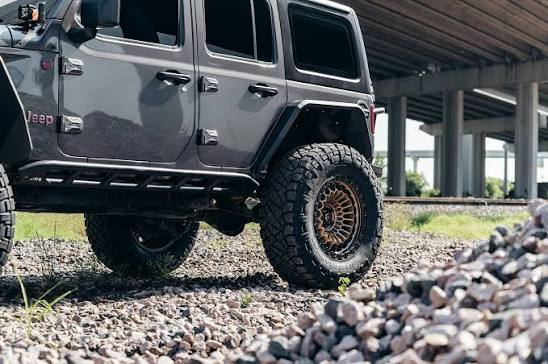
Choosing the right wheels for a Jeep involves more than finding a design that looks good in the driveway. Wheel diameter, width, offset, backspacing, tire size, suspension setup, and intended use all influence how a Jeep handles on pavement and performs on the trail.
For owners who use their Jeep as both a daily driver and a weekend off-road vehicle, the goal is usually to find a combination that provides adequate tire clearance and trail capability without compromising steering feel, stability, or everyday comfort. Shopping for jeep wheels with the correct specifications can help create a setup that works as well during the Monday commute as it does on rocky trails or uneven terrain.
Understanding a few core fitment measurements before buying can make the selection process much easier.
Understanding Offset, Backspacing, and Fitment
Wheel offset and backspacing determine where a wheel and tire sit in relation to the Jeep’s hub, suspension components, and fenders. They are especially important when upgrading to wider wheels or larger off-road tires.
Offset measures the distance between the wheel’s centerline and its mounting surface. A wheel with positive offset typically positions more of the wheel inward toward the suspension, while a negative offset moves the wheel farther outward. Changing offset can create additional clearance for larger tires, but pushing the wheels too far outward can also affect steering characteristics and place additional leverage on suspension and wheel-bearing components.
Backspacing measures the distance from the wheel’s mounting surface to the inner edge of the wheel. Less backspacing generally moves the wheel outward, providing more clearance around control arms and other suspension components. More backspacing places the wheel farther inward.
Because wheel width also affects these measurements, Jeep wheel fitment should be considered as a complete package rather than focusing on one number alone. The vehicle model, model year, axle configuration, suspension lift, tire width, fender clearance, and intended use should all be considered before selecting an aftermarket wheel.
Owners planning an off-road wheel and tire upgrade should also verify bolt pattern, hub bore, brake clearance, and load rating. Proper fitment can reduce the risk of rubbing during steering or suspension articulation while helping the vehicle maintain predictable road manners.
Precision Fitment That Enhances Handling and Stability
Aggressive wheel fitment can give a Jeep a wider stance, but more aggressive is not automatically better. A wheel positioned too far outward may increase scrub radius and alter steering feedback. A wheel positioned too far inward may cause a wider tire to contact suspension components during turns.
For a Jeep that sees significant highway mileage, maintaining balanced wheel positioning is particularly important. A properly matched wheel and tire package can contribute to more consistent steering, stable cornering, and predictable braking while still creating enough clearance for off-road driving.
Wheel construction should also match how the Jeep will be used. Trail-focused drivers may prioritize durable off-road wheels that can withstand rough terrain and repeated impacts. Daily drivers may place greater emphasis on weight, ride quality, corrosion resistance, and ease of maintenance.
Wheel diameter affects the amount of tire sidewall available as well. More sidewall can be advantageous off-road because the tire has additional flexibility when aired down, helping it conform to rocks, roots, sand, and uneven surfaces.
That is one reason 16 inch jeep wheels can appeal to owners looking for a traditional off-road setup with generous tire sidewall. However, brake clearance and tire availability should always be checked for the specific Jeep before moving to a smaller-diameter wheel.
Matching Wheel Size to 33–37 Inch Tires
Larger tires are one of the most common upgrades for Wrangler and other trail-oriented Jeep builds, but moving from factory-size tires to 33-, 35-, or 37-inch tires changes more than ground clearance.
For many mixed-use builds, 33-inch tires provide a practical starting point. They can deliver a more aggressive appearance and improved trail capability without requiring the same degree of supporting modification often associated with substantially larger tires. Exact clearance requirements depend on the Jeep model, trim, suspension, wheel specifications, and tire width.
A 35-inch tire is a popular choice for more serious off-road builds because it offers additional ground clearance and a larger footprint. This size often requires closer attention to suspension lift, fender clearance, bump stops, gearing, and wheel backspacing. Tire rubbing can occur when the suspension compresses or the steering reaches full lock if the wheel and tire combination is not properly matched.
For this type of build, 17 inch rims are a common option because they provide a useful balance between wheel diameter and tire sidewall. With 35-inch or 37-inch off-road tires, a 17-inch wheel leaves substantial sidewall compared with larger-diameter street-oriented wheels, which can be useful when lowering tire pressure for trail conditions.
Moving to 37-inch tires generally requires a more comprehensive approach. Tire clearance is only one consideration. Depending on the Jeep, larger tires may call for suspension modifications, appropriate gearing, stronger steering or axle components, revised bump-stop settings, and careful attention to wheel offset and backspacing.
Larger tires also add rotating mass and can change acceleration, braking, steering response, fuel consumption, and ride characteristics. That makes it especially important for daily-driven Jeeps to choose wheel and tire sizes based on actual use rather than appearance alone.
The best Jeep wheel setup is ultimately one in which the wheel diameter, width, offset, backspacing, tire dimensions, and suspension work together. Before ordering wheels for a Wrangler, Gladiator, or another Jeep platform, confirm vehicle-specific fitment and consider how much time the vehicle will spend on pavement versus the trail.
A well-planned wheel and tire package can provide the tougher stance and additional clearance off-road enthusiasts want while preserving the predictable handling and stability that matter every day.