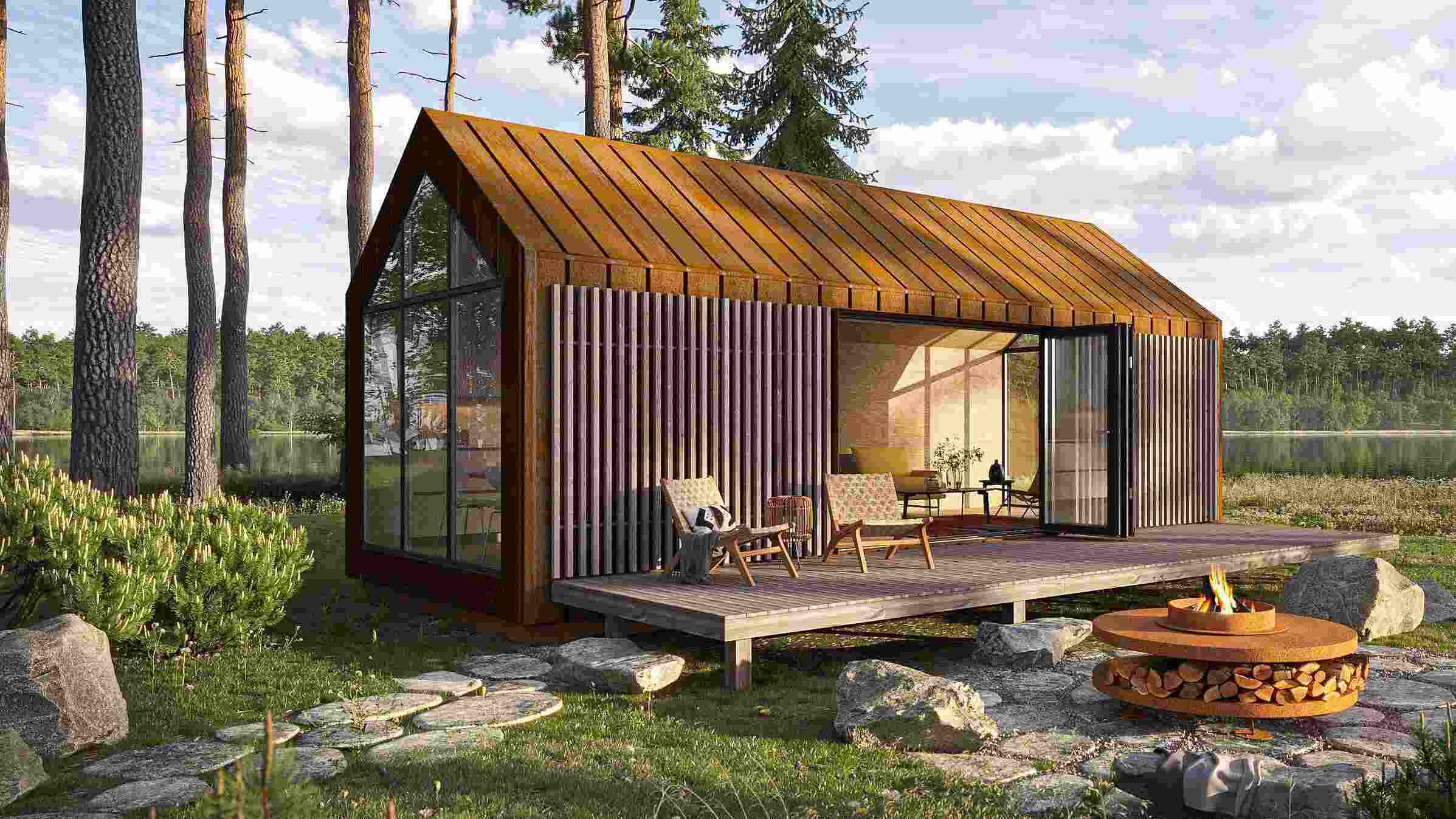
Prefab homes give you faster construction, predictable costs, and modern energy performance without sacrificing design. You can move into a high-quality, customizable house built in a factory-controlled process that often cuts site time and waste, making the whole build more efficient and reliable.
If you want practical choices—bungalows, two-storey models, cottages, or A-frame kits—you’ll find options that match budgets and climates, including designs engineered for Canadian conditions. This article will walk you through how prefab construction works, what to expect when buying, and how living in a prefab home compares to traditional construction so you can decide if it fits your plans.
Understanding Prefab Homes
Prefab home is factory-built houses assembled on your site using pre-made components. You’ll learn what prefab means, the main construction approaches, and the practical advantages that affect cost, timeline, and quality.
What Are Prefab Homes
Prefab homes are houses built from modules, panels, or factory-produced sections that get transported to your lot for assembly. Construction occurs in controlled environments with standardized processes, which reduces weather delays and on-site labor time.
You’ll encounter three common delivery steps: factory fabrication, transport, and on-site joining and finishing. Materials and systems—framing, insulation, windows, and mechanicals—are often installed before shipping to minimize on-site work. Building codes and certification vary by region, so your project may follow modular, manufactured-home, or local residential codes depending on the method and transport.
Types of Prefabricated Houses
Modular: Built as 3D volumetric units joined on-site. Modules stack or connect to form multi-story homes and meet local building codes, which makes financing and resale straightforward.
Panelized: Walls, floors, and roof panels ship flat and assemble on your foundation. Panelized systems offer design flexibility and faster framing than stick-built construction while keeping more on-site finishing work than modular units.
Manufactured (mobile) homes: Built on a permanent chassis and transported whole. They follow a federal HUD code in the U.S. and typically cost less but have different zoning and financing rules than site-built or modular homes.
Other variations include SIPs (structural insulated panels) and hybrid systems that mix factory-built modules with on-site custom work. Choose a type based on budget, local code, design goals, and site access constraints.
Key Benefits of Prefab Homes
Speed: Factory fabrication compresses the schedule; modules can be completed in weeks while site work runs in parallel. You save weeks or months compared with full on-site builds.
Quality control: Controlled factory conditions reduce variability, improve seal and insulation installation, and lower material waste. This often yields better energy performance and more predictable construction quality.
Cost predictability: Standardized production and reduced weather delays limit change orders. You’ll still budget for transport, craning, site utilities, and permits, but base construction costs tend to be more stable.
Sustainability and waste reduction: Factories optimize material use and recycling; tight construction tolerances improve thermal performance. You can also select energy-efficient packages (high-performance windows, upgraded insulation, heat-recovery ventilation) during manufacturing.
Design flexibility and scalability: Modular units can be combined for larger footprints or future expansion. You can customize finishes and layouts while leveraging repeatable factory processes to control cost.
Buying and Living in Prefab Homes
You’ll weigh upfront cost vs. long-term savings, choose which elements you want customized, and plan the site work and delivery logistics to avoid delays. Expect clearer timelines and fewer on-site surprises compared with traditional builds.
Prefab Home Costs
Prefab pricing usually breaks into three parts: factory modules, site work, and installation. Factory modules often range widely depending on size and finish level; budget for mid- to high-quality builds rather than the cheapest quote.
Site work covers foundation, utility hookups, permits, and grading. Expect permitting and utility connections to add 10–25% to the factory price in many jurisdictions.
Factor in these common additional costs:
- Transportation and crane fees for delivery and set-up.
- Upgrades (kitchen appliances, high-efficiency HVAC, upgraded finishes).
- Local taxes, inspections, and impact fees.
Get multiple written bids that separate module cost, site work, and administration fees. Ask manufacturers for a line-item estimate and a list of included finishes so you can compare apples to apples.
Customization and Design Options
You can select from standard floor plans or order semi-custom and fully custom modules. Standard plans reduce cost and lead time; semi-custom lets you change finishes, window locations, and interior layouts without full architectural re-draws.
Materials and systems choices—insulation level, windows, HVAC, and exterior cladding—impact energy performance and resale value.
Use this checklist when choosing options:
- Must-have structural changes (width, ceiling height) — confirm factory limits.
- Energy upgrades (triple glazing, continuous insulation, heat pump).
- Interior finish packages (kitchen cabinets, flooring, built-in storage).
Confirm what the manufacturer will warranty and what voids warranties (owner modifications). Request 3D plans and a finish sample pack before signing to avoid costly post-delivery changes.
Installation Process
Installation follows site prep, delivery, craning, joining modules, and final hookups. Site prep includes foundation construction, underground utilities, and access clearing; schedule that work early to prevent delays.
On delivery day you’ll need a crane, staging area, and a licensed crew that knows modular connections and on-site sealing.
Typical timeline elements:
- Site permit and foundation — 2–6 weeks depending on approvals.
- Factory build — often 4–12 weeks based on complexity.
- Delivery and set-up — 1–5 days for craning and placement.
- On-site finishing and inspections — 1–6 weeks.
Plan for weather windows and local inspection schedules. Maintain a single point of contact—contractor or project manager—to coordinate manufacturer, crane operator, and local trades during the install phase.