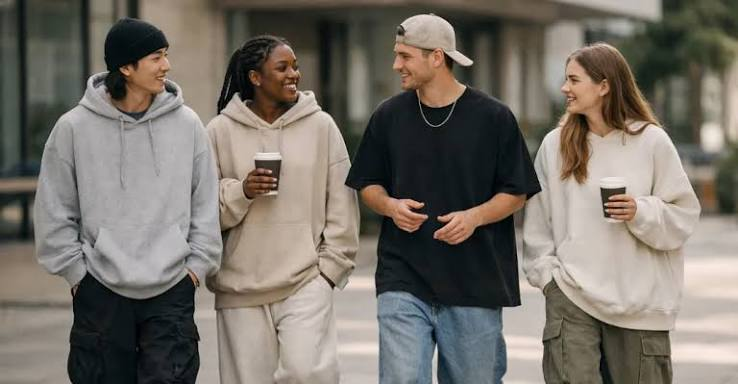
The oversized fit has become an unofficial standard in modern streetwear, but choosing it correctly requires more thought than simply buying a larger size. The key is understanding where a garment should fall loosely and where more structure is needed. This guide explains how to choose the right oversized fit for different body types, with practical examples covering hoodies, jackets, sweatpants, shorts, hats, and T-shirts.
Streetwear pieces such as those associated with marcelo burlon are also useful references for understanding how recognizable graphics can work effectively with relaxed silhouettes and generous proportions.
Key Points
- The oversized fit should be adjusted according to your body shape. A single size up can work well for slimmer builds, while broader frames can handle more generous cuts.
- Balancing proportions is essential. A loose top generally works best with more defined trousers, while wide-leg bottoms can be paired with a more fitted upper layer.
- Transitional-season layering works best when a lightweight shirt or sweater is combined with an oversized hoodie rather than stacking several extremely loose pieces.
- Accessories such as hats and simple white T-shirts can complete an oversized outfit without making it look heavy.
- Large graphics often work particularly well on oversized garments because the wider surface gives prints more room to remain visible and balanced.
What Is an Oversized Fit and Why Is It Popular in Streetwear?
An oversized fit is about intentionally designed proportions rather than randomly choosing a larger size. A well-designed oversized garment usually features slightly dropped shoulders, longer sleeves, and additional room through the body without completely hiding the wearer’s shape.
The difference between an intentional oversized outfit and an untidy one comes down to balance. The garment should look deliberately loose while still maintaining a recognizable silhouette.
Streetwear has embraced the oversized fit partly because it provides more space for printed graphics on the chest, back, and sleeves. Large logos, illustrations, and artistic designs can have greater visual impact when they are placed across a wider surface rather than stretched tightly across the body.
There is also a practical reason for using generous proportions. Heavy fabrics, large pockets, zippers, embroidery, and other construction details can remain more visible when the garment has enough room to move. On a tighter garment, these elements can become distorted during movement.
For this reason, oversized silhouettes are not only a fashion choice. They can also help preserve the intended structure and visual identity of a streetwear piece.
How to Choose the Right Oversized Fit for Your Body Type
Your body shape should be one of the first considerations when choosing an oversized garment.
Someone with a slimmer or smaller frame may benefit from a moderate oversized fit. Going one size above the usual size can create additional room without overwhelming the body. Choosing two or three sizes larger can sometimes make the garment look more like it is wearing you rather than the other way around.
People with broader shoulders or taller frames generally have more freedom to experiment with larger silhouettes because their natural proportions can support additional fabric volume.
One simple way to evaluate an oversized garment is to look at where the shoulder seam falls.
- Slim build: Consider going one size up and choose a length that reaches around the hip.
- Average build: A size above your regular fit or a garment specifically labeled oversized can work well.
- Broader build: Focus on overall length and avoid oversized pieces that are unnecessarily short through the torso.
- Tall build: Longer sleeves and a generous body length can create a more balanced silhouette.
The way the fabric behaves is also important. Heavy cotton tends to maintain the shape of an oversized garment as you move, while lightweight materials may fall closer to the body and reduce the visual impact of the oversized silhouette.
Therefore, don’t look only at the size label. Fabric weight, shoulder construction, sleeve length, and body length can all affect the final fit.
How to Style an Oversized Men’s Hoodie Without Looking Untidy
The hoodie is one of the easiest garments for showing off an oversized fit. However, styling an oversized hoodie successfully depends on controlling the volume throughout the rest of the outfit.
If your hoodie is particularly wide, the trousers do not necessarily need to be equally oversized. Straight-leg or slightly tapered trousers can create a cleaner balance while allowing the hoodie to remain the main statement piece.
A strong graphic can also work especially well with a relaxed silhouette. A felpa marcelo burlon can serve as a useful reference for how a large central graphic can remain visually balanced when it is placed on a spacious garment.
Footwear also plays an important role. Chunkier sneakers with a substantial sole can visually balance a large hoodie, while extremely thin or low-profile footwear may make the upper half of the outfit appear disproportionately large.
For an additional streetwear touch, a structured beanie or similar hat can provide a defined visual point against the softer shape of an oversized hoodie.
Shirts, Jackets and Layers: Managing Oversized Fits in Fall
Layering is where oversized styling can become more difficult. Wearing multiple extremely loose garments can quickly make an outfit appear bulky, particularly on a smaller frame.
A more effective approach is to create different levels of volume.
For example, a lightweight T-shirt or thin sweater can work as a base layer underneath an oversized hoodie. Another option is to wear an oversized shirt underneath a jacket that is slightly shorter and more structured.
A maglia marcelo burlon can work as a practical example of a graphic top used as a visible or partially visible layer underneath a relaxed jacket. When the jacket remains open, part of the graphic can appear without competing with every other element of the outfit.
This layered approach allows several pieces to work together while giving each garment its own visual space.
For slimmer body types, it is usually better to avoid three extremely oversized layers at once. Two relaxed pieces are often enough, while the third element can be a smaller accessory such as a scarf, cap, or compact bag.
The same principle applies throughout the year: when one garment adds significant volume, another part of the outfit should provide definition.
Sweatpants, Shorts and the Lower Half of an Oversized Outfit
Oversized sweatpants follow the same proportion rules as oversized tops.
Wide sweatpants often look best when paired with a shorter or more fitted upper layer. A regular-fit T-shirt or slightly cropped hoodie can prevent the entire outfit from becoming too loose from top to bottom.
Cuffed ankles can also help define the silhouette. Even when the legs are wide, a narrower opening around the ankle creates a visual endpoint and keeps the outfit from looking shapeless.
Oversized shorts are particularly useful during warmer months. They can be paired with a regular or slightly oversized T-shirt for a balanced summer streetwear outfit.
However, combining very wide shorts with a heavy oversized hoodie can concentrate too much volume around the upper body and legs. A lighter top usually creates a cleaner summer silhouette.
The goal is not necessarily to make every garment fitted. Instead, the goal is to create contrast between different volumes.
Hats and Accessories: The Finishing Touch for an Oversized Fit
Accessories can be one of the easiest ways to refine an oversized outfit without changing the main garments.
A structured beanie, baseball cap, or bucket hat can provide a defined element against loose hoodies and jackets. This contrast helps keep the overall outfit visually organized.
A plain white T-shirt is another useful styling tool. When worn underneath a graphic hoodie or jacket, the simple layer can create breathing room around the upper body and prevent several strong graphics from competing with each other.
Small details can also make a difference. A visible belt, compact shoulder bag, or coordinated phone case can introduce a subtle visual connection between different parts of the outfit without adding excessive volume.
When styling oversized clothing, accessories should complement the silhouette rather than compete with it.
Frequently Asked Questions About Oversized Fit
How can I tell if an oversized hoodie is the right size?
The shoulder should fall slightly beyond the natural shoulder line, while the sleeves should generally reach the wrist without completely covering the hands. If the garment overwhelms your body and loses all visible structure, you may need a smaller size.
How can I wear a men’s oversized hoodie with oversized trousers without looking untidy?
Balance is the key. If the hoodie is already very loose, consider straight-leg or slightly tapered trousers. If you want to wear wide trousers, a shorter or more structured top can help maintain definition.
How should I wear sweatpants in an oversized outfit?
Oversized sweatpants generally work well with a regular-fit or slightly shorter top. A fitted T-shirt, cropped hoodie, or structured jacket can create contrast and prevent the entire outfit from appearing excessively wide.
What is the difference between a comfortable fit and an oversized fit?
A comfortable fit provides extra room while generally following the body’s natural proportions. An oversized fit intentionally adds more volume around areas such as the shoulders, sleeves, torso, and sometimes the overall length.
How should I choose a hat for an oversized streetwear outfit?
A structured hat, beanie, or bucket hat can provide contrast against soft and oversized garments. Avoid choosing an extremely large hat if your outfit already has significant volume around the upper body.
Are oversized shorts suitable for every season?
Oversized shorts are primarily suited to warmer weather. They can be combined with regular or slightly oversized T-shirts during summer. In cooler transitional weather, longer trousers generally make it easier to maintain balanced proportions.