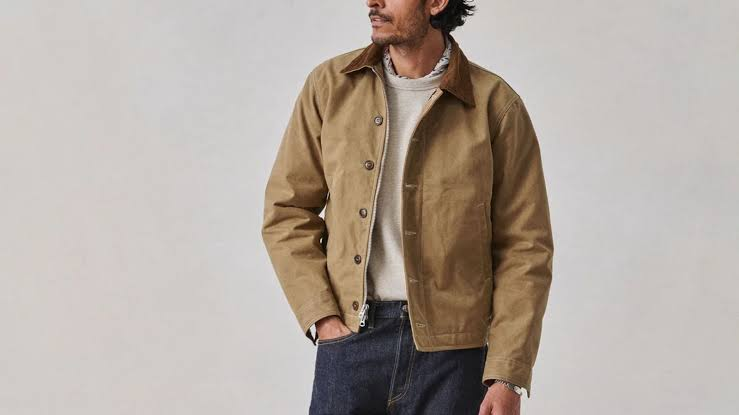
Work jacket outfits have quietly taken over street style, and it makes sense. Chore coats, canvas jackets, and utility shells were built for durability first, which means they age well, layer easily, and photograph better with a bit of wear on them. This piece breaks down how to actually wear a work jacket outfit without it reading as costume, plus where fabric and fit matter most. The team at JCaesar has watched this category grow from a niche archive interest into one of the most requested silhouettes in casualwear, and there’s a reason it’s sticking around.
Key takeaways
- Treat the work jacket as the outfit’s anchor and keep everything else understated
- Size up rather than down so the jacket keeps its boxy, functional shape
- Stick to two or three earthy tones and layer hoodies or thermals underneath as seasons change
- Avoid dress shoes and skinny bottoms, which clash with the utilitarian silhouette
- Check fabric weight before buying since it changes how the whole outfit hangs
Unlike a lot of trend cycles, work jacket outfits aren’t really new. They’re a reissue of clothing that was designed for function decades ago, now filtered through a streetwear lens. That’s part of the appeal: the pieces already look intentional because they were never designed to be decorative in the first place.
What Counts as a Work Jacket in Streetwear
Not every jacket with pockets qualifies. A true work jacket outfit usually starts with one of three garments: the chore coat (boxy, four pockets, cotton or canvas), the duck canvas jacket (heavier, often lined, built for cold job sites), or the mechanic jacket (shorter, snap-front, sometimes with a corduroy collar). Each one carries a slightly different attitude.
Denim trucker jackets get lumped into this category too, but they behave more like a separate style tier. If you’re building a genuine work jacket outfit, the chore coat is the easiest entry point because it layers over almost anything without adding bulk.
Building a Work Jacket Outfit From the Ground Up
The strongest work jacket outfits treat the jacket as the anchor, not the accent. That means the rest of the fit should be quieter: a plain or lightly graphic tee, straight or slightly tapered trousers, and boots or low trainers with a chunky sole. Anything too polished underneath fights with the raw, workwear texture of the jacket itself.
- Base layer: heavyweight tee or long-sleeve, ideally in a muted tone
- Bottom: canvas trousers, cargo pants, or straight denim (avoid skinny fits, they clash with the boxy jacket silhouette)
- Footwear: work boots, retro runners, or leather derbies depending on how dressed up you want to go
- Accessories: a canvas tote or crossbody bag continues the utilitarian theme without overdoing it
Colour Pairing That Works
Work jackets come in earthy, muted colours for a reason: they were meant to hide dirt and last through seasons. Lean into that. Olive, rust, sand, and charcoal all pair naturally with each other and with denim. Save bright colour for one item only, usually footwear or a cap, so the jacket stays the visual centrepiece.
Layering a Work Jacket Outfit Through the Seasons
A well-made work jacket outfit isn’t a one-season plan. In spring and early autumn, wear the jacket open over a tee with nothing underneath it. As temperatures drop, add a hoodie underneath and let the hood sit outside the collar, which is one of the more overlooked details in work jacket outfits done right. In genuinely cold weather, a thermal or flannel base layer under the jacket keeps the silhouette intact without needing a heavier coat on top.
This layering logic is exactly why work jackets have stayed relevant in streetwear circles longer than a lot of trend pieces. They’re not seasonal in the way a puffer or a light bomber is; the same jacket can carry three different outfit builds depending on what’s underneath it.
Common Mistakes in Work Jacket Outfits
The biggest mistake is sizing the jacket too small. Work jackets are meant to have room to move and layer, so a snug fit defeats the point and looks more like a blazer than a work jacket. The second mistake is pairing it with anything too dressy, like tailored trousers or dress shoes; the contrast reads as confused rather than intentional.
| Mistake | Why it doesn’t work | Fix |
| Jacket sized too tight | Loses the boxy, functional silhouette | Size up one from your usual fit |
| Dress shoes underneath | Clashes with utilitarian materials | Stick to boots or casual trainers |
| Overly busy graphic tee | Competes with the jacket’s pocket detailing | Choose a plain or minimal print tee |
| Skinny bottoms | Creates an unbalanced silhouette | Go straight-leg or slightly wide |
Where a Brand Fit Comes In
Fabric weight makes a bigger difference in a work jacket outfit than in almost any other streetwear category, because the whole look depends on the jacket holding its shape. Heavier canvas or waxed cotton drapes differently than a lightweight cotton twill, and that changes how the rest of the outfit hangs. Browsing options like jcaesar gives a decent sense of how weight and cut vary between chore coats aimed at streetwear versus ones built purely for utility work.
It’s worth trying a jacket on with the actual base layers you plan to wear underneath it, rather than judging fit off a bare mannequin. A jacket that looks slim in a photo can feel completely different once a hoodie is added underneath. For a closer look at how different weights of canvas behave once layered, the range at jcaesar studio is a useful reference point.
Accessorising Without Overdoing It
Work jacket outfits don’t need much extra. A beanie or a structured cap, a simple crossbody bag, and one piece of jewellery (a chain or a ring, not both if the jacket already has visible hardware) is usually enough. The jacket itself is doing most of the visual work, so the goal is support, not competition.
Some people browsing jceasar or similar streetwear labels for the first time expect to need a full matching set, but that’s rarely how the best work jacket outfits are actually built. Mixing brands, eras, and price points is normal and often looks more considered than an all-one-label fit.
A Quick Framework for Styling Any Work Jacket
Instead of memorising specific outfit combinations, use this three-question check before leaving the house. First, is the jacket the visual focus, or is something else competing with it? Second, does the colour palette stay within two or three tones total? Third, does the footwear match the formality level of the jacket rather than dressing it up or down too far? If all three answers line up, the work jacket outfit will hold together regardless of the exact pieces involved.
This is the same logic the design team at JCaesar applies when building seasonal drops, and it’s a useful mental checklist for anyone assembling a work jacket outfit from pieces already sitting in their wardrobe rather than buying everything new.
Frequently Asked Questions
What is the difference between a chore coat and a work jacket?
A chore coat is technically one type of work jacket, defined by its boxy cut and four-pocket front.