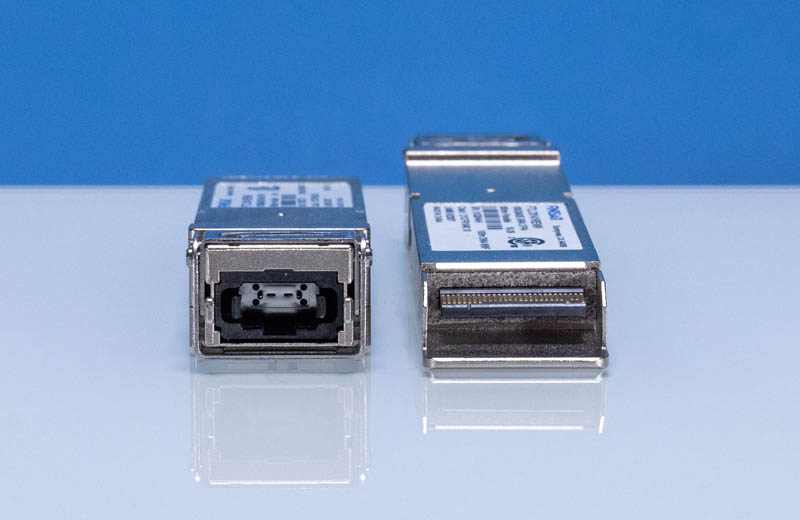
As cloud computing, hyperscale data centers, and high‑performance enterprise networks continue to expand, the push for faster optical connectivity has become relentless. One of the key milestones in this evolution was the move from 10G and 40G Ethernet to 100G. To meet this demand, several optical transceiver standards emerged — CFP, CFP2, CFP4, and QSFP28 — each representing a step forward in size, power efficiency, and network density.
This article breaks down the main differences between these 100G module types and explains why QSFP28 has become the dominant choice for most modern 100G data center networks.
Background: The Evolution Toward 100G
In the early 2010s, the CFP (C‑Form‑Factor Pluggable) standard was introduced under the CFP Multi‑Source Agreement (MSA) and IEEE 802.3ba. It was designed to support 40G and 100G Ethernet applications, offering flexibility across multiple protocols like OTN and SONET. However, its relatively large size limited its use in high‑density environments.
As technology advanced, the CFP family evolved to CFP2 and CFP4 — each generation shrinking in size and improving power efficiency. Then came QSFP28 (Quad Small Form‑Factor Pluggable 28), a compact 100G module that redefined scalability for top‑of‑rack and spine‑leaf data center architecture.
Physical Size and Port Density
Size is one of the most visible distinctions among these modules. The original CFP was roughly the size of a human palm — large and power‑hungry — which made it suitable mainly for backbone routers and transport equipment.
- CFP: The largest, supporting early 100G deployments but offering limited port density.
- CFP2: About half the size of CFP, allowing more ports per line card.
- CFP4: One‑quarter the size of CFP, bringing notable improvements in density and power.
- QSFP28: Even smaller than CFP4, similar in size to the earlier QSFP+ form factor, enabling ultra‑high port density on switches and servers.
A high‑density switch using 100G QSFP28 can accommodate dozens more 100G ports within the same rack space compared with one using CFP optics — a decisive advantage in hyperscale data centers etulink com titanlink de.
Power Consumption and Heat Management
Power efficiency drives the economics of data‑center networking. The initial CFP modules typically consumed 6 W – 24 W per transceiver, generating significant heat and requiring robust cooling. By contrast, QSFP28 modules typically draw less than 3.5 W, dramatically lowering total energy use and cooling costs.
CFP2 and CFP4 fall somewhere in between — roughly 4 W – 8 W depending on vendor and optics type. The smaller footprint and lower power draw of QSFP28 not only reduce operational costs but also allow tighter switch spacing and quieter thermal designs.
Transmission Distance and Optical Interfaces
Each form factor supports multiple optical variants (SR, LR, ER, CWDM, etc.) targeting specific distance requirements:
| Module Type | Typical Reach | Fiber Type | Common Standards |
| CFP | Up to 40 km | SMF/MMF | 100GBASE‑SR10 / LR4 / ER4 |
| CFP2 | Up to 40 km | SMF/MMF | 100GBASE‑LR4 / ER4 |
| CFP4 | Up to 10 km | SMF/MMF | 100GBASE‑LR4 |
| QSFP28 | 100 m – 40 km | SMF/MMF | SR4 / CWDM4 / PSM4 / LR4 / ER4 |
CFP and CFP2 modules are often used in metro and backbone networks where long‑haul capacity (10–40 km or more) is crucial. In contrast, QSFP28 modules cover both short‑reach and long‑reach applications, offering cost‑effective options for 100 m multimode data‑center runs or long‑distance single‑mode links fiber-life.
Electrical Interface and Lane Structure
All these 100G standards rely on parallel lanes to achieve high throughput. The difference lies in how many electrical lanes and at what data rate they operate:
- CFP/CFP2/CFP4: Can use 10 × 10 Gbps or 4 × 25 Gbps electrical lanes depending on model.
- QSFP28: Uses 4 × 25 Gbps lanes exclusively, simplifying design and reducing signal loss.
This streamlined four‑lane architecture is one reason QSFP28 modules balance performance with cost even at high densities.
Cost and Upgrade Flexibility
When it comes to overall cost, QSFP28 clearly outperforms the CFP line. Smaller packaging, lower power usage, and mass adoption have significantly lowered per‑port pricing. Data centers migrating from 10G to 100G can often reuse multimode cabling and upgrade directly with QSFP28 SR4 or QSFP28 CWDM4 modules, minimizing infrastructure changes.
CFP modules, by comparison, remain more expensive due to their size, materials, and niche use in telecom transport systems.
Application Scenarios
- CFP – Best suited for long‑haul optical transport networks (OTN), core routers, and other telecom applications requiring extended reach and high power budgets.
- CFP2 – A transitional model for metro networks balancing reach and efficiency.
- CFP4 – Used in high‑capacity aggregation layers where space starts to matter but long reach is still needed.
- QSFP28 – Dominant in data centers and cloud infrastructures, including spine‑leaf and top‑of‑rack design, thanks to its scalability and cost advantage.
Future Outlook
Although CFP modules continue to serve specialized telecom applications, the industry trend is clear: smaller, faster, and more energy‑efficient designs are taking over. The widespread adoption of QSFP28 laid the foundation for next‑generation formats like QSFP56 (200 G) and QSFP‑DD (400 G), ensuring backward mechanical and electrical compatibility while delivering higher bandwidth.
For operators seeking to future‑proof their networks, choosing QSFP‑based systems often provides the best balance of performance, density, and upgradability.
Side‑by‑Side Comparison
| Feature | CFP | CFP2 | CFP4 | QSFP28 |
| Size | Very large | 50% smaller than CFP | 25% of CFP | Smallest |
| Port Density | Low | Medium | High | Highest |
| Power Consumption | 6–24 W | 4–8 W | 4–6 W | <3.5 W |
| Reach | Up to 40 km | Up to 40 km | Up to 10 km | 100 m – 40 km |
| Typical Use | Core / Backbone | Metro | Aggregation | Data Center |
| Cost | High | Medium | Moderate | Low |
Conclusion
The transition from CFP to QSFP28 marks a fundamental shift in how network engineers think about scaling bandwidth. The earlier CFP family drove the adoption of 100 Gigabit Ethernet in telecom networks, offering long‑haul reliability but limited density. QSFP28, on the other hand, brings compact design, low power consumption, and high port counts — the ideal combination for today’s hyperscale and cloud architectures.
In practical terms:
- Choose CFP/CFP2/CFP4 for long‑distance optical transport where high optical budgets matter more than space.
- Choose QSFP28 for modern data centers seeking energy efficiency, simplified cabling, and cost‑effective 100G connectivity.
As networks evolve toward 400G and beyond, the legacy of QSFP28 will remain visible — smaller form factors delivering ever‑greater speeds within the same physical footprint. Its balance of performance, efficiency, and scalability ensures that the QSFP28 form factor will continue to shape the backbone of high‑speed networking for years to come.